


Reading time: about 20 minutes at low pace, hours when following references.
Executive summary: the communications group of the EU BEACON One Health education via new technologies COST action has been created to unite all who stand for truth, transparency, and open science. It calls for members and contributors to join a coordinated media campaign that will present the action’s work across Europe and partner nations, including Indonesia, through a full media kit, official correspondence, and outreach to traditional and digital outlets. The campaign represents our first collective effort to defend the integrity of science and education in a world where honesty still carries personal risk. It will give visibility and voice to a network of more than forty countries and nearly eight hundred million people, working together under the shared principles of one health to ensure that truth, evidence, and social accountability prevail over corruption and silence.
Please, unsubscribe if not interested any longer. Link below, at the end of this message if received by email. Please, comment or drop a line to us, to join in, at comms@health.int.eu.org. Thank you so much to you all for the ongoing support.
The communications group of the EU BEACON One Health education via new technologies COST action has been recently established to reinforce the integrity of our shared mission. As the scientific communications, dissemination and exploitation officer, I now open this call to all willing to contribute their time, skill, and conscience to a work that is as vital as it is demanding. We need more hands, many more, to sustain the growing weight of communication that comes with building a network grounded in transparency, open science, and collective progress.
The communications group will begin by coordinating a unified media campaign that gives visibility and coherence to the action’s mission across Europe, its associated countries, and key partner nations including Indonesia. Our first joint task will be the release of a complete media kit containing new video materials, long form documentation, interviews, and open editorials designed for both traditional and digital media circulation. We will prepare official letterheads and correspondence packages addressed to top level authorities, key stakeholders, and institutional partners at the national and international level. The campaign will ensure coverage in print, broadcast, and online outlets, using multilingual dissemination channels and strategic engagement with academic, civic, and governmental media networks. Each member of the communications group will contribute to ensuring that the messaging remains factual, inclusive, and aligned with the ethical principles of transparency, open science, and social accountability.
Together, the group’s work will reflect the true scope of the action, spanning the entire COST area with more than forty countries and a combined population exceeding five hundred million people, together with Indonesia as a cooperating partner country, bringing the total reach to nearly eight hundred million individuals, including more than one hundred and fifty million children within their education and health systems. The mandate is clear: to strengthen the democratic function of science communication, to defend the integrity of health and environmental research, and to ensure that knowledge flows freely between citizens, institutions, and decision makers. This media campaign will act as the first structured expression of that mandate, giving form and voice to the action’s vision of an open, evidence based, and socially responsible European and global community working under the shared principles of one health.
This effort unfolds in corrupt, criminal environments, still commonplace, where truth still carries a cost -physical violence, career destruction, extortion, all punitive measures criminals allow themselves, including killing of us. In many places, those who communicate honestly about power, injustice, or harm face not only isolation or defamation, but imprisonment, torture, and even death. From scientists silenced for revealing environmental destruction, to reporters abducted for exposing crimes of state or industry, to educators persecuted for defending independent thought, the pattern is universal. The attempt to serve the public good often meets retaliation from those who depend on ignorance and confusion to retain control.
Corruption has many forms. It hides behind bureaucracy, propaganda, and the pretense of legality. It punishes integrity through exhaustion, fear, and censorship rather than open debate. Across history, reformers, thinkers, and communicators have paid the highest price for refusing complicity. The suppression of knowledge, whether through exile, imprisonment, or violence, remains the most effective tool of those who fear it. Yet each generation has shown that silence sustains injustice, while honest speech dismantles it. Science and journalism form the twin foundations of any democratic society. Both operate as systems of verification, producing and communicating truth through evidence, transparency, and public accountability. Science generates reliable knowledge about the natural and social world, while journalism ensures that this knowledge, and the power structures it affects, reach the public sphere. Together they maintain the dialogue between expertise and citizenship upon which democracy depends. When either is undermined, ignorance replaces informed debate, and authority substitutes evidence. The freedom to investigate, publish, and question enables societies to confront error and corruption, to correct policy, and to adapt to new challenges. In this sense, both scientists and journalists serve not as elites but as custodians of the public’s right to know, the essential condition for collective self-governance.
The action communications group stands on that same ground, to enable a healthy action, non corrupt, non criminally oriented, honest. We coordinate the official publication, the mailing list comms@health.int.eu.org, and all communication channels of the action. Our work is to ensure that truth, once found, cannot be buried again. This is not a ceremonial task but a safeguard of accountability. It combines journalism, science, and civic duty in one field of continuous vigilance. The purpose is to make facts visible, to document what others would prefer to erase, and to preserve the integrity of collective knowledge against manipulation. More resources, all infrastructure and action media, will be built together, from here on.
The network we are building depends on such honesty. Every message we produce must be factual, verifiable, and free from private or political distortion. We communicate not to please but to inform, not to flatter but to clarify. We turn research into understanding and make evidence public, where it belongs. The work is heavy and unrelenting because it touches the nerves of systems that thrive in obscurity. It is imperative, as the only path that sustains progress and shields those who act in good faith against the criminal minded, the abusers, torturers, murderers.
If you believe in open collaboration, in evidence as the basis for decision making, and in communication as an ethical obligation, we invite you to take part. Join the communications group. Help write, translate, edit, review, manage, design, or coordinate. Bring your discipline, your voice, your strength. Extend this call to others who share the same sense of responsibility.
The struggle for truth has always been costly, yet every voice added to the cause makes the cost bearable. Through collective communication, we ensure that knowledge continues to speak even when silence is demanded. This is how progress survives corruption, and how societies recover their conscience. Ours mirrors that of many throughout history who have worked to reveal uncomfortable truths, to document social injustice, and to defend human dignity. Scientists silenced for exposing industrial harm to health and nature. Journalists censored for unveiling state abuse or corporate deceit. Educators and reformers expelled or discredited for challenging dogma or privilege. The means change, but the mechanisms of suppression remain the same: fatigue, intimidation, and isolation.
Those who communicate truthfully about the structures of harm and criminal hands own actions are always the first to be attacked. These patterns are tragically evident in recent times, as much as in all human history, redisplaying the worse of human nature over and over again. This is the human factor in one health, the driving force for all the weakening, sickening, destruction. The one priority to be addressed, from education onward, if we are to stand a chance to do better, society-wide, everywhere.
In Central Africa, a journalist who investigated state corruption and the misuse of public institutions was recently abducted, tortured, and killed. The motive was to suppress revelations threatening the political and financial elite. The crime demonstrated how mechanisms of fear and silence persist within structures of power. Investigations have led to charges against several senior officials, yet the process of justice remains incomplete, reflecting the systemic barriers that protect perpetrators and discourage accountability (Amnesty International, 2024).
In Europe, the killing of a young investigative journalist and his partner after uncovering links between organized crime and political figures triggered massive civic protests and the eventual resignation of a national government, also recently. The killings are ongoing, barely reported. The attack was not random but strategic, aimed at deterring scrutiny and preserving impunity. The assassins have been convicted, but the intellectual authors, those who ordered and financed the crime, continue to evade full responsibility, illustrating the limits of justice when corruption penetrates both economy and state (European Federation of Journalists, 2023).
Elsewhere, in South Asia, a journalist who reported on police corruption and illegal trade networks was found murdered after a series of threats. The brutality of the crime reflected an effort to erase not only a person but also the evidence of structural wrongdoing. Although local authorities arrested suspects, the underlying culture that normalizes violence against truth tellers remains largely intact. There are not isolated events (Committee to Protect Journalists, 2023).
The same mechanisms appear beyond journalism. In environmental science, researchers who documented the health effects of industrial pollutants have faced institutional suppression, professional retaliation, and the destruction of careers. One prominent case revealed deliberate efforts by a multinational corporation to discredit findings on chemical toxicity. Years of legal battles and public exposure eventually forced regulatory change, but only after immense personal and financial tolls on those who stood by the evidence (Lerner, 2023).
The systematic persecution of those who defend life, health, and truth spans the past half century of modern history. Each act of violence against researchers, environmental defenders, health workers, and indigenous leaders is rooted in the same logic: silence those who expose the consequences of greed, deny accountability, and destroy the living evidence of injustice. What unites these events is not geography or ideology but motive—the protection of profit and power against the voice of conscience (Michaels, 2008).
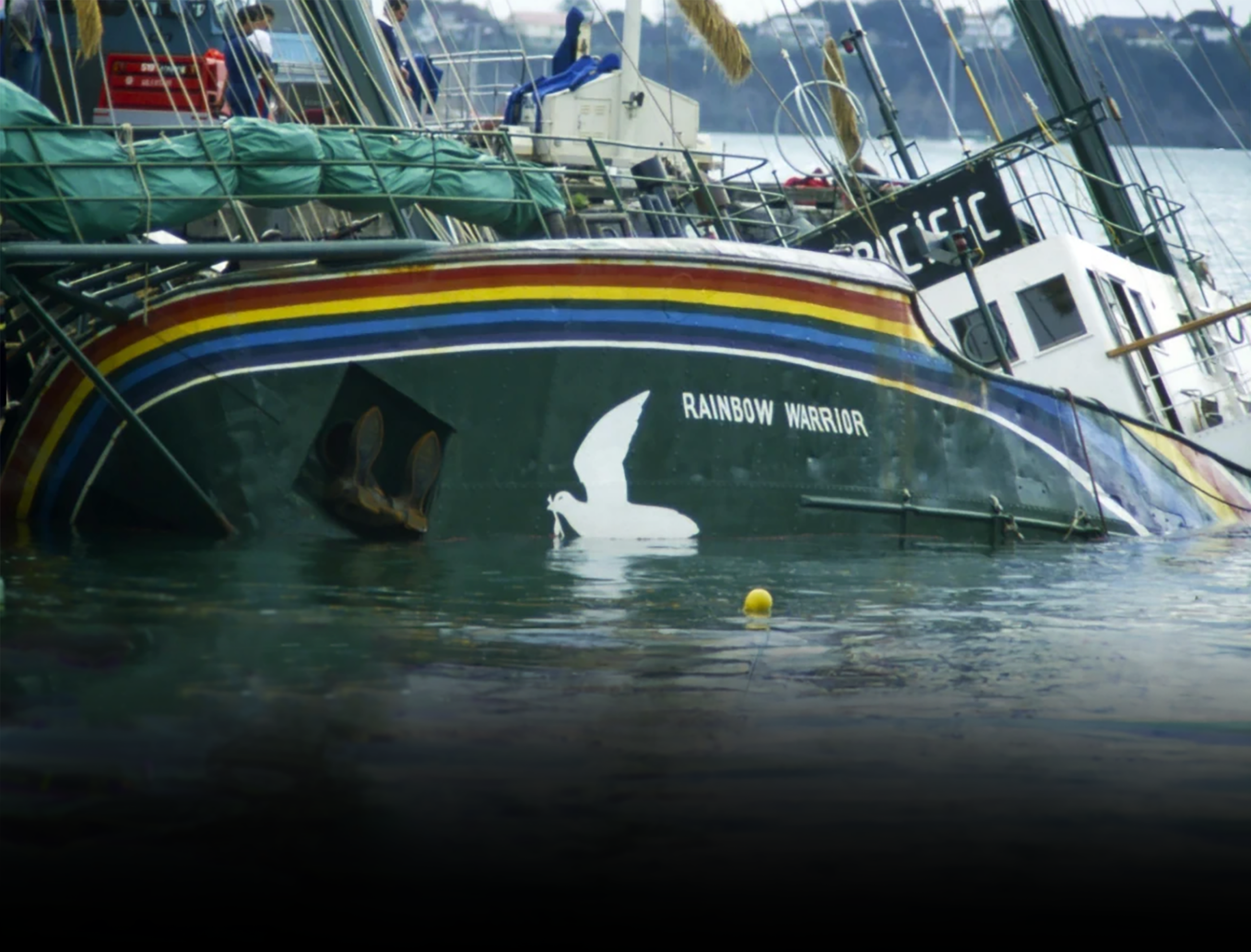
1985 – The Rainbow Warrior bombing
In July 1985, the Greenpeace vessel Rainbow Warrior was docked in Auckland Harbour, New Zealand, preparing to lead a campaign documenting the environmental and human health impacts of nuclear testing in the Pacific. Agents of the French intelligence service placed explosive charges on the hull. The first blast immobilised the ship; the second killed photographer Fernando Pereira, who had returned below deck to retrieve his equipment. The operation had been authorised at ministerial level in Paris. Two agents were convicted of manslaughter in New Zealand and sentenced to ten years, later transferred to French custody and released after less than two. The French government issued an apology and paid compensation, but no senior official faced trial. The motive was explicit: to suppress evidence of radioactive contamination and deter transnational environmental monitoring. The bombing revealed the lengths to which states will go to preserve strategic secrecy under the pretext of national security, even at the cost of civilian life (Friedrichs, 2007).
1990s–2000s – The suppression of environmental health scientists
During the final decade of the twentieth century and the beginning of the twenty-first, numerous scientists across Europe, North America, Asia, and Latin America documented toxic pollution, pesticide poisoning, and industrial contamination affecting entire communities. Their findings linked corporate operations to cancer clusters, reproductive disorders, and ecological collapse. In response, corporations and their political allies launched coordinated efforts to erase the credibility of their work. Lawsuits for alleged defamation or breach of confidentiality were common. Laboratories were defunded, journal articles retracted under pressure, and entire research teams dismantled. Many of these scientists were accused of bias or conflict of interest, subjected to smear campaigns, or driven out of academia. Internal documents from multiple chemical and oil companies later revealed intentional strategies to undermine independent research and delay regulation. Careers were destroyed through isolation, economic ruin, and reputational defamation, while the populations they sought to protect continued to suffer from exposure (Michaels & Monforton, 2005).
2000s–2020s – The killings of environmental and indigenous defenders
Across South America, Central Africa, and Southeast Asia, opposition to deforestation, mining, and agribusiness expansion has cost hundreds of lives. The victims include indigenous leaders, teachers, park rangers, and health professionals working with rural populations displaced by land grabs. In Brazil, Colombia, Peru, and Honduras, entire communities defending ancestral lands have been targeted by militias financed by logging or plantation interests. Official reports by Global Witness and the United Nations confirm a consistent pattern: the use of paramilitary violence, criminalisation through anti-terror or trespass laws, and manipulation of the judiciary to protect corporate and political elites (Scheidel et al., 2020).
Those who work to end the massacre of first peoples are frequently accused of undermining development or national sovereignty. Health and human rights workers documenting the health consequences of forced displacement are harassed, monitored, or charged with incitement. Land defenders in Borneo and Papua have been killed after reporting illegal forest clearing, often in areas officially designated for conservation. Their deaths are rarely investigated. In many regions, assassinations are preceded by defamation campaigns branding defenders as extremists or foreign agents, followed by bureaucratic suffocation—revocation of operating permits, police harassment, and fabricated criminal charges. The objective is systematic elimination: physical, legal, and social. The result is silence and erasure (Xiong et al., 2021).
2019–2020 – The COVID-19 whistleblower
In late 2019, a young physician in Wuhan identified clusters of pneumonia of unknown origin and alerted colleagues to the risk of a viral outbreak. He was detained by local authorities, forced to retract his statement, and reprimanded for spreading unapproved information. He returned to work under surveillance, contracted the same infection, and died soon after. His courage and professional ethics became an emblem of global moral clarity in the face of repression. The disciplinary action against him was later acknowledged as wrongful, yet those responsible were never prosecuted. The motive behind the silencing was the same that underlies environmental censorship: the defense of reputation, the denial of vulnerability, and the protection of institutional hierarchy over truth. His death demonstrated that the suppression of early warnings transforms errors into catastrophes. He acted as a physician and a citizen committed to the protection of life, and his legacy endures as a reminder that transparency is the first condition of health (Evans & Leach, 2022).
2020s – The continuing obstruction of One Health communication
In this decade, suppression has evolved into a more subtle but equally damaging form. Researchers linking deforestation, industrial agriculture, and climate degradation to the emergence of zoonotic diseases face obstruction through financial pressure and digital harassment. Governments and corporate lobbies have refined strategies to control narratives by funding misinformation and undermining scientific integrity. Experts working on antimicrobial resistance or biodiversity loss have been sidelined from policy processes when their evidence challenges industrial or trade priorities. Funding bodies avoid politically sensitive research, and whistleblowers within public health systems risk career termination. The pattern remains clear: discredit, isolate, exhaust, and, if necessary, destroy the livelihoods of those who warn of systemic harm.
Throughout these decades, from the bombing of an environmental ship to the killing of indigenous defenders and the silencing of physicians, the story is the same. Those who expose harm in the name of public and planetary health are treated as enemies of order. Their destruction is often administrative rather than physical—character assassination, litigation, exclusion, and poverty—but the intention is identical: to erase witnesses and delay truth.
To honor them is to continue their work. Each researcher, activist, and health worker who refused silence embodies the ethical foundation of One Health. They remind us that the defense of life requires more than knowledge; it requires courage. Our duty as communicators is to safeguard that courage, preserve the record of truth, and ensure that no death or defamation achieves what its perpetrators intended.
These cases exemplify how corruption operates when confronted by truth. The motives of torturers and murderers are neither ideological nor personal. They are functional. Their acts are designed to protect illicit wealth, sustain political control, and prevent the spread of verified knowledge. The victims’ silence is not the goal; it is a means to secure the continued operation of impunity.
We work in the setting of corrupt, violent, aggressively criminal societies where the level of discourse, if any, is based on lies, deceit, harassment, more violence by all means available, threats and crimes of the worse nature. Torture. Our work in the action communications group stands in continuity with those who defend truth under threat. We operate to prevent erasure, to document accurately, and to keep evidence public and accessible. Each participant in this mission helps ensure that truth remains stronger than fear. Communication here is not publicity but protection. It is the act of preserving the moral and factual foundation upon which science, governance, and society depend.
In case you wish, please join this work. Even if only to repost, help share along and amplify the reach, it will make a tremendous difference. We aim to reach traditional media as well. Thank you for bringing in your skills and integrity. The integrity of the action, its transparency, depends on organized truth telling. Please, join us in.
References:
Amnesty International. (2024). Cameroon: Justice delayed in the killing of investigative journalist Martinez Zogo. London: Amnesty International.
Committee to Protect Journalists. (2023). India: Journalists under attack—Patterns of violence, impunity, and suppression of corruption reporting. New York: CPJ Publications.
European Federation of Journalists. (2023). Slovakia: Justice still incomplete five years after the murder of Ján Kuciak and Martina Kušnírová. Brussels: EFJ Reports.
Evans, B., & Leach, M. (2022). The politics of One Health: Knowledge, power and governance. Palgrave Macmillan.
Friedrichs, D. O. (2007). Trusted criminals: White collar crime in contemporary society. Belmont, CA: Wadsworth.
Lerner, S. (2023, November). Inside 3M’s decade long campaign to protect forever chemicals. ProPublica. https://www.propublica.org/article/3m-forever-chemicals-pfas-pfos-inside-story
Michaels, D. (2008). Doubt is their product: How industry’s assault on science threatens your health. Oxford University Press.
Michaels, D., & Monforton, C. (2005). Manufacturing uncertainty: Contested science and the protection of the public’s health and environment. American Journal of Public Health, 95(S1), S39–S48. https://doi.org/10.2105/AJPH.2004.043059
Scheidel, A., Temper, L., Demaria, F., & Martínez-Alier, J. (2020). Ecological distribution conflicts as forces for sustainability: An analysis of environmental justice movements. Global Environmental Change, 63, 102113. https://doi.org/10.1016/j.gloenvcha.2020.102113
Xiong, W., Liu, W., & Wang, Y. (2021). Censorship and information suppression during COVID-19 outbreak: Lessons from early China. Health Security, 19(5), 427–434. https://doi.org/10.1089/hs.2020.0121